Two Markets,
different rules
A painting bought directly from a gallery exhibition operates under a completely different set of economic and social rules than that same painting sold at auction three years later.
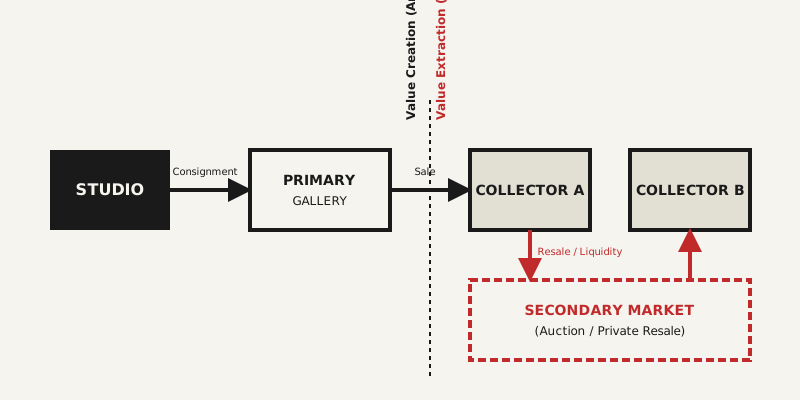
Primary Market
- Definition: First time the artwork is sold. Direct from studio to gallery to collector.
- Pricing: Controlled, incremental increases. Dealers manage the artist's career to avoid price spikes and crashes.
- Access: Heavily gated. You cannot simply walk in and buy the best work; you must be "placed."
- Standard Split: 50% Artist / 50% Gallery.
Secondary Market
- Definition: Resale of the artwork via auction houses, private dealers, or collectors.
- Pricing: Driven purely by supply, demand, and immediate liquidity. Highly volatile.
- Access: Open to anyone with capital (at auction) or access to the private broker.
- Standard Split: Zero to the artist (in the US). Capital gains to the seller minus broker/auction fees.
The Flipping Problem
When an artist is "hot" on the primary market (e.g., paintings sold for $20,000), opportunistic buyers may try to flip the work immediately on the secondary market (e.g., at auction for $100,000).
Galleries despise this because it creates unsustainable price bubbles and deprives the artist of the upside. Galleries enforce "Right of First Refusal" contracts to prevent flipping, though they are difficult to enforce legally.
Navigating the Secondary Market
Looking for trusted secondary market dealers? Our directory tracks specializations and history.
Search the Directory